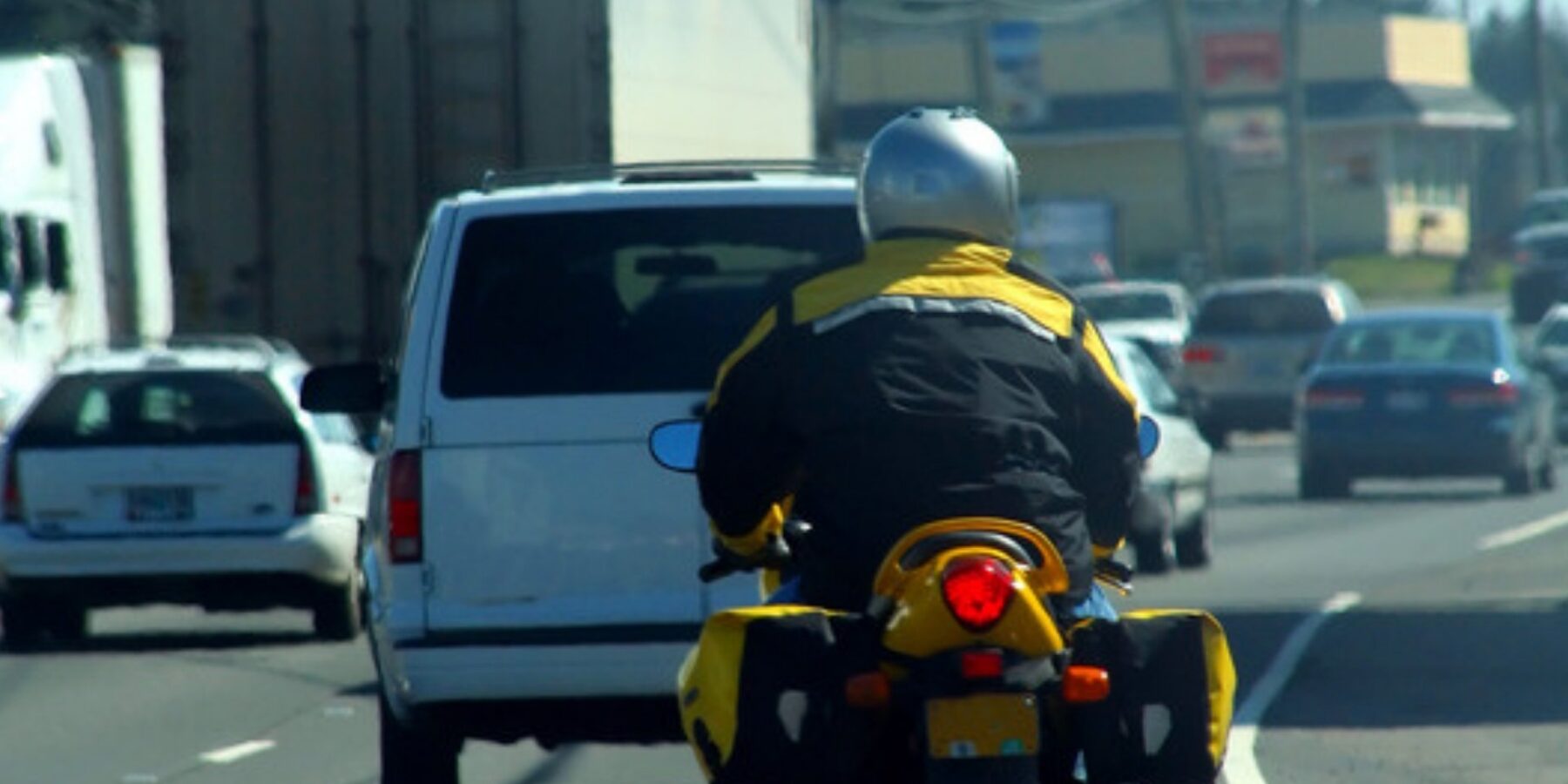
A Victorville motorcycle accident lawyer starts with a fact many adjusters skip. No California statute bans lane splitting, and Vehicle Code section 21658.1 defines it. Fault then turns on your speed, the space you had, and what the driver did. Under pure comparative fault, your share of the blame reduces damages but does not bar the claim.
The Law Offices of Larry H. Parker handles motorcycle crash claims across the High Desert, including Victorville and Apple Valley, and throughout the Inland Empire. The firm was founded by Larry H. Parker. You do not have to visit an office to get started. A field representative can meet you at home or in the hospital while you recover.
If a driver hit you while you were splitting lanes in Victorville, call The Law Offices of Larry H. Parker at (866) 578-8031 for a free case review. Someone answers 24/7, and the first conversation costs you nothing.
What a Victorville Motorcycle Accident Lawyer Checks First After a Lane Splitting Crash
The adjuster’s opening line is easy to predict. You were between the cars, so the crash must be your fault. The Victorville motorcycle crash attorneys at The Law Offices of Larry H. Parker start somewhere else. They rebuild the crash second by second and look at what each person did in those seconds.
Why start there? Lane splitting is a lawful maneuver, so being between lanes proves nothing by itself. The real questions are narrower, and the evidence answers most of them. These are the facts that usually decide who carries the blame.
- Your speed compared with the cars beside you shows whether you were riding with care.
- The overall speed of traffic shows whether splitting made sense at that moment.
- The gap between the vehicles shows whether there was room for your bike.
- A turn signal, or the lack of one, shows whether the driver warned anyone before moving.
- Video, witnesses, and vehicle damage show who moved into whose path.
None of these facts comes from the words “lane splitting” on a report. The firm gathers them early, before cameras record over the footage and witnesses scatter.
Is Lane Splitting Legal on Victorville Streets and Interstate 15?
Yes. No California law prohibits it, and the Vehicle Code now defines it. Vehicle Code section 21658.1 describes lane splitting as riding a two-wheeled motorcycle between rows of stopped or moving vehicles in the same lane. The definition reaches divided and undivided streets, roads, and highways. That covers Interstate 15 and a surface street like Bear Valley Road alike.
Here is the catch. The statute grants no right to split and sets no rules for how to do it. It gives the California Highway Patrol power to write educational guidelines, and that gap is where most fault fights start. The firm’s page on California lane splitting accident claims covers the statewide picture.
What the Definition in Section 21658.1 Covers
Read the definition closely, because it is narrower than most riders think. It covers a motorcycle with two wheels in contact with the ground. Vehicle Code section 400 counts a vehicle with up to three wheels as a motorcycle. Section 21658.1 reaches only two wheels on the ground, so a trike or a sidecar rig falls outside it. Riding between rows of stopped cars fits the definition too. Moving up between cars at a red light, which many riders call filtering, is part of it.
What the Statute Leaves Out
Section 21658.1 sets no speed, no traffic threshold, and no list of lanes where splitting is allowed. Subdivision (b) lets the CHP develop educational guidelines. Subdivision (c) says the CHP must consult the DMV, Caltrans, and the Office of Traffic Safety, plus a motorcycle safety group. That history matters in a claim, because insurers quote speed numbers as if they were law.
The 2013 Guidelines and Why They Came Down
The CHP first posted lane splitting guidelines in early 2013, and the DMV printed them in its motorcycle handbook. They told riders to go no more than 10 mph faster than traffic and to stop splitting once traffic reached 30 mph. A complaint to the Office of Administrative Law argued they were rules adopted without formal rulemaking. CBS News reported on July 24, 2014, that the state had pulled them.
AB 51 and the Speed Limits That Did Not Pass
Assembly Bill 51 is the bill that added section 21658.1. The Assembly version would have capped lane splitting at 50 mph and at 15 mph over surrounding traffic. The Senate struck those limits before the bill passed. What survived was the definition and the CHP’s power to write educational guidelines, in effect since January 1, 2017.
Today’s CHP Tips Are Advice, Not Law
The CHP later published general safety tips under that power. They again suggest riding no more than 10 mph faster than other traffic. They also say splitting is not advisable when traffic moves at 30 mph or faster. Adjusters quote those tips as a yardstick, but breaking one is not breaking a statute. A rider who passed cars at 15 mph faster still gets judged on whether that speed was reasonable.
How Fault Gets Divided After a Victorville Lane Splitting Crash
California does not shut the door on a rider who shares the blame. Under Li v. Yellow Cab Co. (1975) 13 Cal.3d 804, the state follows pure comparative fault. A jury assigns each person a percentage, and your damages drop by your share. A rider found 20% at fault keeps a claim for the other 80%.
So the fight is over the percentage. Where it lands depends on facts a lawyer has to review, including speed, spacing, and video, and no lawyer can promise the number. The firm’s page on what a California injury claim is worth explains the other factors that move the value.
Driver Moves That Shift the Blame Back
Many lane splitting crashes start with a driver who moves without looking. Two Vehicle Code sections come up often in these claims. Each one puts a duty on the driver that exists whether or not a motorcycle is splitting. When a driver breaks one, the rider’s position between lanes carries far less weight in the fault split. A driver’s own admission at the scene, such as “I never saw the bike,” often points straight at one of them.
Lane Changes Without a Signal or a Look
Vehicle Code section 22107 bars moving right or left until the move can be made with reasonable safety. It also requires a signal when another vehicle may be affected. Section 21658(a) adds that a driver may not leave a lane until the move is reasonably safe. A driver who drifts into the gap on Interstate 15 without checking mirrors has trouble with both rules.
Doors Opened Into Stopped Traffic
Stopped traffic is where riders filter, and it is also where doors swing open. Vehicle Code section 22517 bars opening a door on the side available to moving traffic unless it is reasonably safe. The rule also bars leaving that door open longer than needed to load or unload. A passenger who swings a door into a rider moving between stopped cars likely broke that rule.
Rider Choices an Adjuster Will Question
Insurers do not stop at the driver’s mistakes. They look hard at the rider too, and speed and safety gear draw the most attention. Expect the adjuster to ask about your helmet, your gear, and any camera footage early on. Each point can move the fault percentage, but only when the evidence ties it to the crash or to a specific injury.
Speed Compared With the Traffic Around You
Vehicle Code section 22350 bars anyone from driving faster than is reasonable or prudent for the conditions. Every rider and every driver answers to that rule. No single number decides it. The question is whether your speed was reasonable in that traffic, on that road, at that moment.
Why a CHP Tip Is Not a Statute Under Evidence Code Section 669
Evidence Code section 669 presumes negligence when someone violates a statute, ordinance, or regulation and causes the kind of harm it targets. The CHP’s lane splitting tips are none of those. The 2013 version came down after a complaint that it never went through formal rulemaking. Riding 12 mph faster than traffic does not trigger that presumption, though a jury can still weigh it.
How Speed Gets Proven Without a Radar Gun
Few lane splitting crashes come with a radar reading. Speed usually comes from other sources. Helmet camera files carry time stamps, and the frames show how fast the cars beside you were moving. Many newer cars store speed and braking data in an event data recorder. Ride-tracking apps can log GPS speed, and crush damage helps a reconstruction expert fill the gaps.
Helmet Use Under Vehicle Code Section 27803
California requires every rider and passenger to wear a fastened, properly fitting safety helmet under Vehicle Code section 27803. The statute itself says nothing about damages. An insurer that wants a missing helmet to cut your claim has to tie it to the injury. A helmet would not have prevented a broken leg or a crushed foot. Head injuries are different, and the firm’s page on brain injuries from motorcycle crashes covers those claims.
Where Lane Splitting Crashes Happen Around Victorville
Where you went down shapes who writes the report, which records exist, and who else may share the blame. Victorville riders split lanes in two very different settings. One is the interstate. The other is the city’s wide arterial streets, where cars turn, merge, and pull out of shopping centers.
Each setting brings its own evidence and its own investigating agency. Knowing which one applies tells you where to request the report and how fast you need to move on video. The firm’s Victorville personal injury attorneys handle crashes in both.
Interstate 15 Through the Victor Valley
Interstate 15 carries traffic between Southern California and Las Vegas through Victorville and down the Cajon Pass. When it slows, riders move up between the lanes, and some drivers stuck in traffic change lanes without warning. Crashes on the interstate usually go to the California Highway Patrol’s Victorville Area office. A CHP freeway report often includes lane positions, measurements, and statements taken at the scene.
Bear Valley Road, Palmdale Road, and Other City Streets
Section 21658.1 covers undivided streets too, so splitting on Bear Valley Road, Palmdale Road, or Mojave Drive falls under the same definition. Crashes on city streets usually go to the Victorville Police Department. The San Bernardino County Sheriff’s Department runs it from 14200 Amargosa Road. Victorville was the Sheriff’s first contract city, and the station has served as its police department since 1962. The Victorville Police Department station page lists its address, phone, and office hours.
Evidence That Shows What Happened Between the Lanes
Lane splitting claims turn on small details. A few inches of position, a second of timing, or one missing turn signal can change the fault split. Much of that detail sits in places that disappear within days, such as camera loops and the memories of drivers who never stopped.
So start gathering early. This list covers what the firm looks for first in a Victorville claim.
- Raw helmet camera or dashcam files should be copied before the device records over them.
- Photos of the damage on both vehicles can show who moved into whose path.
- Names and phone numbers of drivers who stopped can confirm a sudden lane change.
- Business cameras along Bear Valley Road may keep footage for only a short time.
- The tow yard’s name and the bike’s storage location keep the physical evidence reachable.
Do not edit or trim any video before sending it, because an untouched original keeps its time stamps. Keep the bike unrepaired until it has been photographed, too. A scrape along a car’s left front fender, for example, suggests the car moved left into the rider.
What Insurance Pays After a Victorville Motorcycle Crash
Fault decides how much of the loss the other side owes. Insurance decides where the money can actually come from. A rider hurt in a lane splitting crash may have several sources, and each one follows its own rules.
These are the usual places a claim draws from. What any of them pays in your case depends on the policies involved and on facts a lawyer has to review.
- The at-fault driver’s liability policy pays for injuries that driver caused.
- Your own uninsured or underinsured motorist coverage can step in when that policy is missing or too small.
- Medical payments coverage on your motorcycle policy may cover early treatment bills.
- Health insurance can pay for care, though it may seek repayment from a settlement.
The order matters, and so do the policy limits. A lawyer reads each policy before deciding which claim to open first.
Minimum Limits Changed for Policies Issued Since 2025
Plenty of websites still list California’s old minimums of $15,000 per person and $30,000 per crash. Vehicle Code section 16056 raised them for any policy issued or renewed on or after January 1, 2025. Those policies must carry at least $30,000 for one person’s injuries and $60,000 for two or more people. A serious motorcycle injury can run past either amount quickly.
When the Driver Swerves and Never Touches You
Some lane splitting crashes involve no contact at all. A car darts into the gap, you swerve, and the bike goes down. If that driver stops, you can bring a claim against the driver’s insurance like any other crash. If the driver keeps going, Insurance Code section 11580.2(b)(1) becomes a problem. For an unknown driver, uninsured motorist coverage requires physical contact between that car and you or the vehicle you occupied.
That rule makes identifying the driver urgent. A plate number from a witness or a camera turns a phantom vehicle into a known one. The same section requires a police report within 24 hours and a sworn statement to your insurer within 30 days. The firm’s page on uninsured motorist claims in California covers the rest of that process.
Riding Without Insurance Under Proposition 213
Some riders let a motorcycle policy lapse during the months the bike sits in the garage. That choice carries a price. Proposition 213, now Civil Code section 3333.4, bars an uninsured owner or operator from recovering non-economic damages such as pain and suffering. Medical bills and lost wages stay on the table. An exception protects an uninsured owner hit by a driver convicted of DUI for that crash.
Deadlines That Apply After a Victorville Motorcycle Crash
Deadlines keep running while you heal and while the insurer investigates. Some are counted in days, not years. Missing one can end a claim no matter how strong the fault evidence looks.
Put these California dates on a calendar in the same week as the crash.
- A report to the DMV is due within 10 days if anyone was hurt or property damage tops $1,000, under Vehicle Code section 16000.
- A hit-and-run uninsured motorist claim needs a police report within 24 hours.
- A claim against a public entity, such as the City of Victorville or Caltrans, is due within six months under Government Code section 911.2.
- A lawsuit against the driver must be filed within two years under Code of Civil Procedure section 335.1.
Which deadline controls depends on who may share the blame. That is a question for a lawyer who has reviewed your facts.
Road Defects on City Streets or Interstate 15
Not every lane splitting crash starts with a driver. Debris, a broken pavement edge, or a worn lane marker can put a rider down too. Government Code section 835 can make a public entity liable for a dangerous condition of its property in some cases. The City of Victorville handles city streets, and Caltrans maintains Interstate 15. A claim against either one must be presented within the six-month window.
Where a Victorville Injury Lawsuit Is Filed
Victorville sits in San Bernardino County, so an injury lawsuit goes through the San Bernardino County Superior Court. Its Civil Division is at the San Bernardino Justice Center, 247 West Third Street. The court decides which courthouse hears a given case, and the firm confirms the filing location when a lawsuit becomes necessary. Many claims settle before a lawsuit, but knowing the court helps you plan.
Victorville Lane Splitting Crash Questions From Riders
Riders who split lanes in the High Desert tend to ask the same handful of questions after a crash. Most of them come down to three things. Was splitting allowed, who pays, and how long is there to act? The short answers below cover the most common versions.
Your own facts can change any of these answers. If your question is not here, the firm can answer it during a free call, and you do not need the police report in hand first.
Is Moving Between Stopped Cars at a Red Light Lane Splitting?
It fits the definition. Vehicle Code section 21658.1 covers riding between rows of stopped or moving vehicles. The same fault analysis applies to a crash at a light on Bear Valley Road.
Does a Ticket for Unsafe Speed Mean I Lose My Claim?
No. A citation reflects the officer’s view of the scene. Fault in the injury claim gets decided on the evidence, and pure comparative fault reduces an award instead of barring it.
Do I Have to Wear a Helmet While Lane Splitting in California?
Yes. Vehicle Code section 27803 requires every rider and passenger to wear a fastened safety helmet that fits. The rule applies whether you are splitting lanes or not.
What if the Driver Who Caused My Crash Never Touched My Bike?
You can still claim against that driver once the driver is identified. If the driver fled, uninsured motorist coverage generally requires physical contact under Insurance Code section 11580.2. Witnesses and video matter most in these cases.
How Long Do I Have to File After a Lane Splitting Crash in Victorville?
Most injury lawsuits must be filed within two years under Code of Civil Procedure section 335.1. A claim against the City of Victorville or Caltrans is due within six months.
Talk to a Victorville Motorcycle Accident Lawyer About Your Lane Splitting Crash
Lane splitting is lawful in California. An adjuster who blames the split is making an argument, and evidence decides fault. A Victorville motorcycle accident lawyer can test that argument against the video, the damage, and the driver’s own moves. The outcome depends on those facts, and nobody can promise it in advance.
The Law Offices of Larry H. Parker offers free case reviews for riders hurt in Victorville and across the High Desert. A field representative can come to you if you cannot travel.
Call (866) 578-8031 any time, day or night. You can also send your details through the firm’s contact page. Camera files record over fast, so the sooner you call, the more evidence survives.
Contact usfor a free consultation.
Phone: (310) 736-6869